
Keynotes
Machine Learning May End the Need for Empirical Correlations: Case of Drop Impact Studies
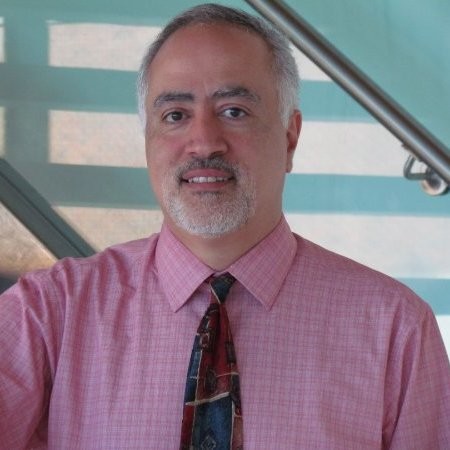
Alidad Amirfazli (York University, Toronto, Canada)
There are many different empirical correlations in the literature to describe the maximum spreading of droplets upon their impact onto a surface. The reason for this has been various parameter ranges or impact conditions past studies have used to establish each of the correlations as per We and Re numbers, or wettability of the substrate. I will present our latest work on droplet impact onto surfaces where we have used a novel approach to predict the maximum spreading of a droplet in a unified matter over a wide range of Weber, Reynolds numbers, and wettability as characterized by contact angle. Regression model using machine learning demonstrate high accuracy in predicting the maximum spreading, providing valuable insights into the underlying dynamics of droplet impacts using dependency parameters (i.e., SHAP analysis). This approach surpasses traditional methods reliant on empirical correlations, offering robust generalization to unseen scenarios, both within and beyond the range of training data, and demonstrating significant transformative potential to advance the field of droplet impact studies. Furthermore, machine learning can be used to effectively generate detailed regime maps; its applications for classification of impact outcomes will be discussed briefly for complex case of compound droplet impact.
Short Bio:
Alidad Amirfazli is the founding Chair of the Department of Mechanical Engineering at York University, Toronto, Canada, where he is currently a Professor. His research interests include droplet surface interactions, surface engineering, heat transfer, and fluid mechanics, and recently integration of AI in research. Dr. Amirfazli has contributed significantly to his field with numerous publications and patents, and he has been recognized with several awards and honors for his work, e.g. King Charles III Coronation Medal, Annual Killam Professorship, appointment to the College of New Scholars, Royal Society of Canada, and being a Fellow of Engineering Institute of Canada. He has also been involved in extensive collaboration with both industry and academic partners.
Advances in Multiphase CFD for Cavitation, Flash-Boiling, and Atomization Processes
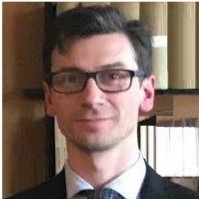
Michele Battistoni (University of Perugia, Italy)
Accurate prediction of multiphase flows is essential for optimizing engineering applications ranging from cavitating hydraulic devices to fuel injection and combustion systems. This keynote presents recent advances in CFD methodologies for simulating cavitation, flash-boiling flows, and spray atomization. The first part focuses on cavitating flows, introducing a novel computational framework that distinguishes between true cavitation and pseudo cavitation caused by dissolved gas release. The approach enables physically consistent evaluation of interphase mass-transfer source terms within conservation equations. The second part addresses fuel–air mixing in internal combustion engines and gas turbine combustors under flash-boiling conditions. Both Lagrangian and Eulerian multiphase approaches are discussed. The Lagrangian framework introduces a breakup model incorporating droplet micro-explosion mechanisms to capture rapid atomization from thermodynamic instability. The Eulerian framework, based on a single-fluid formulation with interphase slip, presents a flash-boiling mass-transfer model accounting for both nucleation and bubble growth mechanisms. All models are validated against experimental data, including measurements for water and liquids containing contaminant gases, as well as liquid and vapor penetration, spray morphology, Sauter mean diameter, and mixture temperature under flash-boiling conditions. The lecture concludes with current challenges and future directions in multiphase CFD, highlighting the importance of high-fidelity predictive models for next-generation clean propulsion and energy systems, including ammonia- and hydrogen-based technologies. Special attention is given to hybrid approaches combining physics-based CFD with machine learning — particularly Physics-Informed Neural Networks (PINNs) — to improve computational efficiency and enhance prediction of complex multiphase phenomena.
Short Bio:
Michele Battistoni is an Associate Professor at the University of Perugia, Italy; and Honorary Affiliate at Monash University, Australia. He was appointed Visiting Professor at KAUST (Saudi Arabia) in 2019. He was also appointed Visiting Scientist at Argonne National Laboratory in Chicago from 2012 till 2014, and in 2016 and 2018. In his early career he worked at Fiat Powertrain in Turin as a design engineer. He received his MS and his PhD in Mechanical Engineering from the University of Perugia.
His research and teaching interests lie in the areas of energy and thermal-fluid sciences, fluid dynamics, multiphase flow, CFD modeling, and energy conversion systems, with main applications to internal combustion engines, burners, sprays and alternative fuels.
He is the recipient and coordinator of a Marie Skłodowska-Curie Doctoral Network in Europe, which enrolls 15 PhD students working on Digital-Twins for Hydrogen and Ammonia in Transport Systems. He serves as SAE session organizer for the Fuel Injection and Sprays sessions, and he is actively involved in the Engine Combustion Network activities where he is leader of the ammonia spray and combustion topic. He has been invited to give presentations at several Universities and Research Institutes, like Argonne (Chicago), Sandia (Livermore, CA), Zhenjiang (China) for ILASS ASIA, IFP-EN (Paris), Shanghai Jiao Tong (China), KAUST (Saudi Arabia) among others.
He has published over 150 papers, among refereed journal articles and conference proceedings. H-index is 35, with approx. 3500 citations.
When droplet and sprays meet extreme conditions: from atomization to nuclear safety
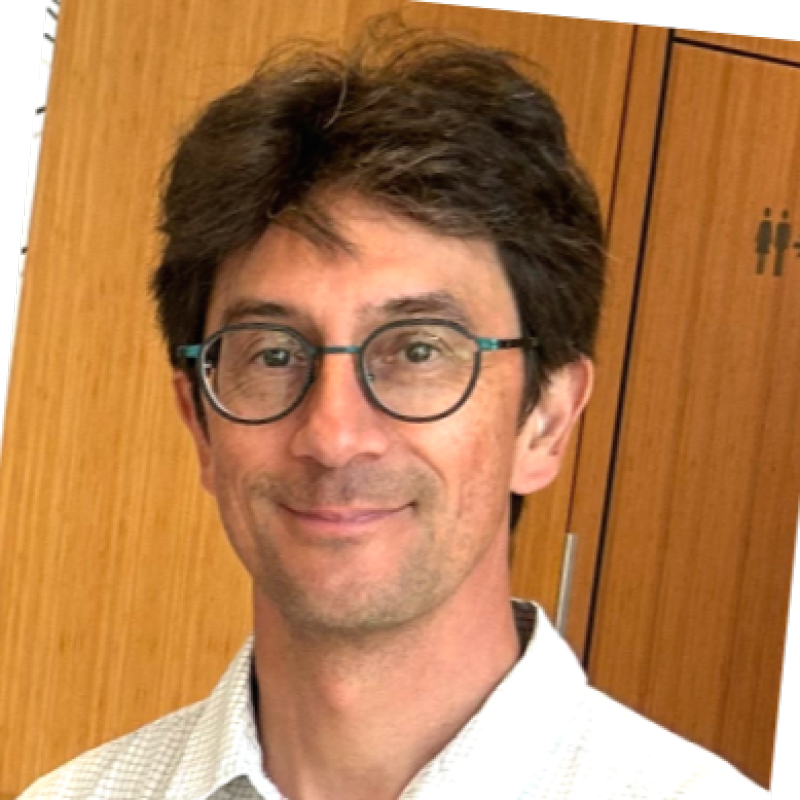
Michel Gradeck (Université de Lorraine, Nancy, France)
Spray and droplet interactions with hot surfaces are central to many engineering applications, yet their behavior changes drastically under extreme thermal conditions. Across scales—from single droplet impact to dense sprays, jet impingement and large-scale configurations—atomization, hydrodynamics and heat and mass transfers become strongly coupled through rapid phase change, vapor layer formation and interfacial instabilities.
This keynote presents a unified experimental and modeling framework spanning these different scales. Using advanced diagnostics and mechanistic approaches, I will show how small scales experiments can help to better understand large scale phenomena.
Beyond fundamental insights, this multi-scale perspective highlights that the same physical mechanisms control cooling performance in safety-critical situations, including those relevant to nuclear safety.
Short Bio:
Michel Gradeck is a Full Professor at the Université de Lorraine since 2013 and conducts his research at LEMTA, a CNRS-affiliated laboratory, where he currently serves as deputy head. His work focuses on two-phase flows with phase change, including boiling, condensation and interfacial heat and mass transfer.
His research combines fundamental investigations of transport mechanisms with application-driven approaches targeting high-performance thermal systems. He has made significant contributions to the understanding of transient boiling and heat transfer at liquid–solid interfaces, particularly under extreme thermal conditions.
His work addresses key industrial challenges in sectors such as steelmaking and nuclear safety, where accurate prediction and control of heat transfer are critical. Through collaborations with major partners including CEA, IRSN (now ASNR), and IRT M2P, he has developed predictive models and experimental methods directly relevant to industrial applications.
His research also contributes to emerging challenges in energy systems, including improving heat transfer efficiency and reducing energy consumption in transient regimes. Overall, his work bridges fundamental thermal science and industrial needs, contributing to performance, safety and energy efficiency.
At the national level, he coordinated the CNRS research network TRANSINTER, structuring the heat and mass transfer community. Internationally, he is involved in European projects such as ESFR-SMART and ESFR-SIMPLE. He is also actively engaged in the organization of scientific conferences in thermal sciences and fluid mechanics.